US Visa Photo (DS-160) Maker
Drop your photo, line it up in the frame and download a JPEG at 600 × 600 px, under 240 KB. The settings below are already filled in for the US Visa Photo (DS-160).
US Visa Photo (DS-160) requirements
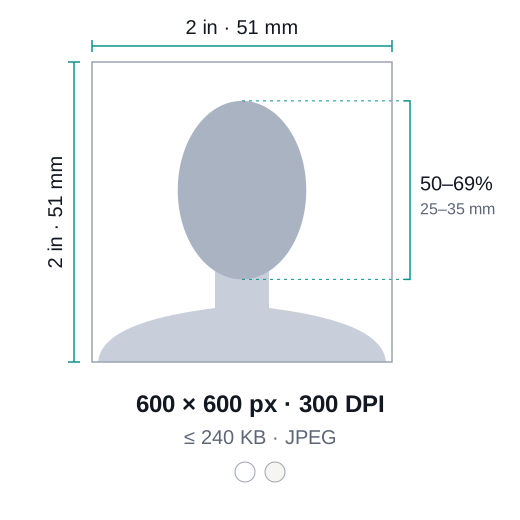
| Size | 600 × 600 px, 2 × 2 in |
|---|---|
| Pixels (our output) | 600 × 600 px at 300 DPI |
| File size | under 240 KB |
| Format | JPEG |
| Background | White, Off-white |
| Head height | 50%–69% of photo height |
- Square image between 600 × 600 and 1200 × 1200 pixels
- JPEG file, 240 KB or smaller
- Head 50%–69% of the image height
- Plain white or off-white background
- No glasses; taken in the last 6 months
Checked against official guidance in October 2026. Requirements change from time to time. Check the latest rules from U.S. Department of State.
How to take your US Visa Photo (DS-160) at home
- Use a plain white or off-white background and face the camera straight on, with a neutral expression and both eyes open.
- Take off your glasses. They have not been allowed in new visa photos since November 1, 2016, except when they cannot be removed for medical reasons and you have a signed medical statement.
- Wear the clothes you normally wear. Uniforms are not allowed, except religious clothing worn daily; a head covering that hides your hair or hairline is only allowed if worn daily for religious reasons.
- Use a good camera in even light. The State Department notes that most webcams and phone cameras do not give images of sufficient quality.
- Drop the photo above to crop a square with the head at 50–69% of the image height. Picwright exports a 600 × 600 px JPEG under 240 KB, ready for the DS-160.
Common reasons your US Visa Photo (DS-160) is rejected
- Not square, smaller than 600 × 600 pixels or larger than 1200 × 1200 pixels
- File larger than 240 KB, or not a JPEG
- Older than 6 months, or no longer matching how you look after facial surgery, large new tattoos or piercings, or a big weight change
- Glasses, sunglasses, headphones or wireless earpieces
- A scan of a driver’s licence or another document, a snapshot or a full-length photo
- Digitally enhanced or altered images — including red eye removed with editing software
Uploading your photo to the DS-160
The DS-160 asks you to upload the digital image while you fill in the form. If the upload fails, the confirmation page shows an “X” instead of your photo — then bring one printed photo that meets the same rules, with the confirmation page, to the embassy or consulate where you apply.
Some embassies and consulates ask every applicant to bring a printed photo to the interview, so check their instructions. Immigrant visa applicants (Form DS-260) bring two identical 2 × 2 inch prints on photo paper instead.
Frequently asked questions
What size is a US Visa Photo (DS-160)?
600 × 600 px, 2 × 2 in. Picwright exports 600 × 600 pixels at 300 DPI, under 240 KB, as a JPEG.
What background colour is required?
A plain white or off-white background. If yours is not, Picwright can replace it with AI right in your browser.
Can I print it?
Yes. Download the 4×6 inch print sheet, print it as a normal 4×6 photo and cut along the guides. Each copy prints at exactly 50.8 × 50.8 mm.
Is my photo uploaded anywhere?
No. Cropping, background removal and compression all run on your device. Nothing is uploaded or stored.
Are these the latest official requirements?
They are taken from the official guidance of U.S. Department of State, but rules change. Always check the current notice or official page before you submit.
More free photo tools
 Passport photo maker2×2 in, 35×45 mm and visa sizes with the right background
 Compress to KBShrink a photo to 20 KB, 50 KB, 100 KB or any size
 Resize to 20 KBUnder 20 KB for exam and job formsResize to 50 KBUnder 50 KB for application photosResize to 100 KBUnder 100 KB with sharp detailResize to 200 KBUnder 200 KB for documents and visas
 Resize imageExact pixels, cm, mm or inches
 Change backgroundWhite, blue, red or any colour with AI
 Change DPISet 300 DPI or any value without resampling
 Convert to JPGPNG, WebP to JPG — or the other way round